
How Are Porcelain Veneers Made? Inside the Digital Dental Lab
When you look at a finished porcelain veneer, you only see the end result. It is a thin shell of ceramic made to blend with your smile.
What you do not see is all the work that happens first.
Modern veneers can involve digital photos, face analysis, 3D mouth scans, computer design, and ceramic making. They also need careful finishing and close teamwork between the dentist and the lab.
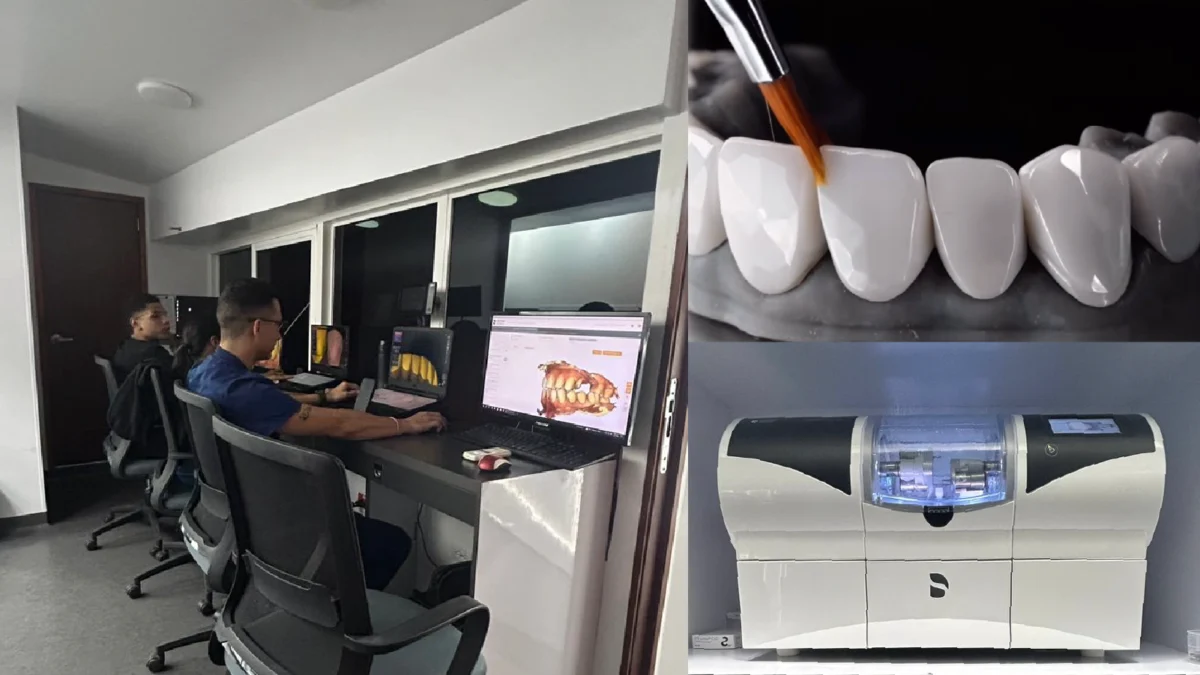
At Smiles by Dr. Mario Montoya Colombia, we use a digital workflow and our own high-tech lab. This gives us more control and lets us tailor each step.
Understanding how porcelain veneers are made helps you look past color alone. You can see the planning, technology, and skill behind a custom smile.
Porcelain Veneers Begin With the Patient — Not the Ceramic
A veneer should not start with picking a white shade from a chart.
It should start with you.
Before designing anything, the dental team may check:
- Oral health
- Existing tooth structure
- Tooth position
- Gum line
- Bite
- Lip movement
- Facial proportions
- Smile width
- Tooth length and shape
- Aesthetic preferences
- Existing restorations
- Grinding or clenching habits
The goal is to see how your new teeth could look. It is also to check if veneers are right for you.
Some patients need another treatment first. Others may do better with a different option.
That is why design starts with a diagnosis, not with making the veneer.
Step 1: Digital Records and Intraoral Scanning
In the past, dentists used physical molds of the teeth.
Today, a small scanner can make a 3D model of your teeth and gums.
The team can then study this model on a screen.
Digital records may include:
- Intraoral scans
- Facial photographs
- Smile photographs
- Videos
- X-rays when clinically indicated
- Bite records
- Previous dental information
These records are the base for your smile design.
At Smiles by Dr. Mario Montoya Colombia, we use a 3D digital workflow to plan each smile.
Learn more about how Digital Smile Design helps plan natural-looking veneers.
Step 2: Designing the Smile
The next step is not just making single teeth.
The team looks at how the teeth will work together as one smile.
Digital planning can help check:
- Tooth width and length
- Symmetry
- Smile line
- Relationship between teeth and lips
- Gum display
- Tooth position
- Shape of the incisal edges
- Overall facial harmony
This is also where your taste matters.
One person may want a soft, very natural look with real texture.
Another may want a brighter, more even, and bolder smile.
Neither choice is better by default.
A good design respects both your oral health and the look you want.
Does Digital Design Mean Every Smile Looks the Same?
No.
Digital technology is a tool.
It helps measure, preview, and explain a treatment. But it should not give every patient the same smile.
Natural teeth vary in:
- Shape
- Surface texture
- Light reflection
- Translucency
- Edge characteristics
- Color
- Symmetry
A well-planned veneer may include small differences on purpose. Not every tooth has to look the same.
The goal is not digital perfection.
It is harmony.
Step 3: Determining Whether Tooth Preparation Is Needed
Before making the veneers, the dentist checks how much space there is.
Some cases need a small, careful reduction of enamel. This gives the veneer the right thickness and shape.
Other cases need less.
The amount depends on things like:
- Existing tooth position
- Tooth volume
- Desired final shape
- Ceramic thickness
- Existing restorations
- Bite
- Available enamel
No single technique works for every patient.
So claims like “all veneers need heavy shaving” or “veneers never need any prep” are too simple.
Keeping as much healthy tooth as possible is still a key goal in modern dentistry.
Step 4: The Digital Design Becomes a Restoration
Once the plan is set, the digital data helps create the ceramic veneer.
This is where CAD/CAM dentistry becomes relevant.
CAD/CAM stands for:
Computer-Aided Design / Computer-Aided Manufacturing.
In simple terms:
CAD helps create the digital restoration.
CAM helps manufacture it.
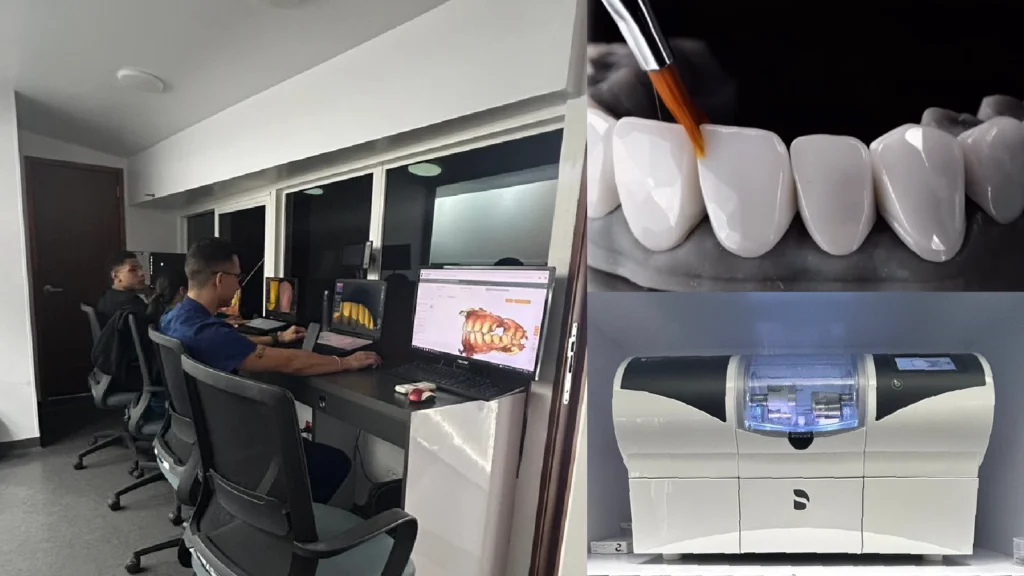
At Smiles by Mario Montoya, we use digital scanning and milling to make custom ceramic veneers.
Studies show good results for ceramic veneers made with CAD/CAM. But long-term success depends on much more than the machine that makes them.
Step 5: Choosing the Ceramic Material
Not all dental ceramics are the same.
Each type has its own look, strength, and way of being made.
The choice of material may depend on:
- Tooth color underneath
- Desired translucency
- Restoration thickness
- Bite
- Tooth position
- Clinical preparation
- Aesthetic goals
- Required strength
So “porcelain” is not one material that acts the same in every case.
The dentist and the lab choose the material based on your plan and your teeth. For teeth that need more coverage, a dental crown may be a better option.
Inside the In-House Dental Lab
An in-house dental laboratory means the clinic designs and makes some or all of the veneers in-house. The work is not fully sent to a lab far away.
At Smiles by Dr. Mario Montoya Colombia, our in-house high-tech lab gives us more control, more customization, and closer attention to detail.
For you, the main benefit is not just speed.
The bigger benefit is communication.
The dentist and lab team can work together on:
- Tooth shape
- Proportions
- Shade
- Surface texture
- Translucency
- Characterization
- Fit
- Requested design adjustments
When the dentist and technician review your case side by side, changes are easier to discuss.
Step 6: Milling or Fabricating the Veneers
Depending on the material, veneers may be milled from a ceramic block or made with another lab method.
With milling, a machine follows the digital design to shape the ceramic.
But milling is not the last step.
A new veneer still needs a careful check.
The technician may refine:
- Contours
- Edges
- Surface anatomy
- Contact areas
- Texture
- Shine
- Optical characteristics
This mix of digital tools and human finishing matters.
Technology brings precision. But a beautiful result still needs a skilled eye and hand.
Step 7: Texture, Translucency and Characterization
Teeth that are perfectly smooth, solid white, and identical often look fake.
Natural enamel plays with light in complex ways.
So the lab may add small details to help each veneer blend with your smile.
These may include:
- Surface texture
- Differences in translucency
- Incisal characteristics
- Small variations in brightness
- Changes in contour
- Individual tooth anatomy
How much detail to add depends on the look you want.
If you want a very natural smile, you may want more small variations.
If you want a glamorous smile, you may prefer a brighter, more even look.
What matters is that these choices are made on purpose.
Step 8: Clinical Try-In and Evaluation
Before final bonding, the dentist checks the veneers in your mouth.
The dentist may check:
- Fit
- Tooth shape
- Shade
- Contact points
- Relationship with the gums
- Smile symmetry
- Lip movement
- Bite
- Overall facial harmony
You also get to see the look before the final placement.
Digital design guides the process. But the final check happens in your mouth.
A veneer that looks perfect on screen still has to work with your real bite and smile.
Step 9: Bonding the Porcelain Veneers
Once the veneers are checked and approved, they are bonded to your teeth.
Bonding is not just “gluing” a veneer on.
It needs careful work on the tooth surface, the ceramic, and the bonding materials. The area must also stay dry and clean.
How long veneers last depends on many things. These include the prep design, remaining enamel, bonding technique, material, bite, and your habits. Learn more about how long veneers last.
That is why technology alone cannot guarantee success.
Is CAD/CAM Better Than Traditional Veneer Fabrication?
Not automatically.
Digital workflows help with previews, communication, accuracy, and faster production.
But research does not show that every digital veneer is better than every traditional one.
One large review looked at how well veneers fit at the edges. It found no major difference between CAD/CAM veneers and traditional porcelain veneers.
Newer studies show CAD/CAM veneers can perform well. Still, long-term data varies by material, technique, and study.
For you, the better question is:
How does the dental team use its technology, materials and clinical experience together?
Why Does an In-House Dental Lab Matter?
A lab does much more than make a piece of ceramic.
It turns the dentist’s plan into your final veneers.
Having the lab in the same workflow helps these people work closely together:
- Dentist
- Dental technician
- Patient coordinator
- Patient
- Digital design team
At Smiles by Dr. Mario Montoya Colombia, our in-house lab is part of a bigger approach. It combines digital tools, premium materials, and custom smile design.
This does not mean every change is instant or that every case takes the same time.
The complexity of your case still sets the pace.
Porcelain Veneers Are More Than a White Surface
Some patients focus almost only on color.
But a great veneer design involves much more.
The team must think about:
- Function
- Proportions
- Gum health
- Tooth structure
- Facial harmony
- Material
- Texture
- Bite
- Maintenance
- Patient expectations
Color is only one part of the result.
It is also why comparing porcelain and composite veneers is about more than which one is “better.”
Read our complete guide to porcelain veneers vs. resin veneers.
From the Digital Lab to the Final Smile
Your final veneers come from many steps working together:
- Diagnosis
- Digital records
- Smile planning
- Tooth preparation when required
- Material selection
- Digital design
- Fabrication
- Laboratory finishing
- Clinical evaluation
- Adhesive bonding
- Follow-up and maintenance
Each stage can influence the next.
So do not judge a veneer only by how white it looks in a photo.
Its design should also be healthy, beautiful, and functional for you.
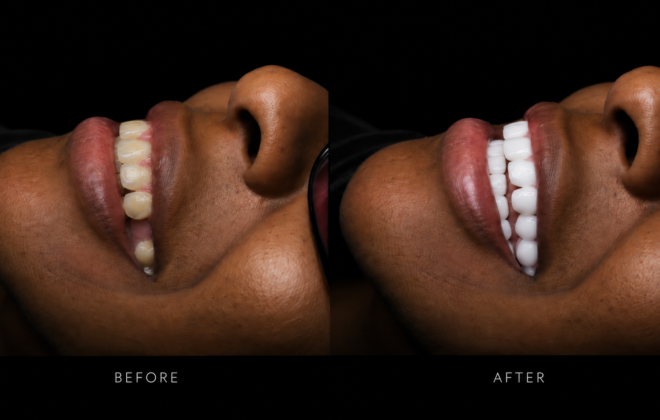
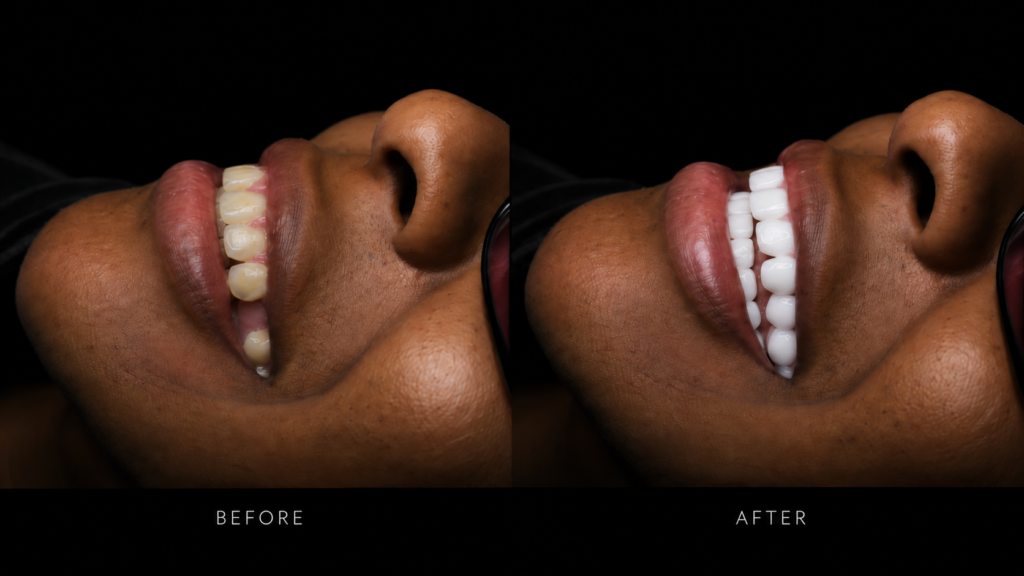
Explore real smile transformations to see different shapes, shades, and smile styles. Results vary for each patient based on diagnosis, anatomy, treatment plan, and care.
Frequently Asked Questions
Are porcelain veneers handmade or made by a computer?
Both. They can involve digital tools and human skill.
CAD/CAM may design and make the veneer. Then a technician may refine the shape, texture, and final look.
Does every porcelain veneer require CAD/CAM technology?
No. Ceramic veneers can be made with different lab methods. The right method depends on the material, the case, and the team.
Does an in-house dental lab mean veneers can be made instantly?
Not necessarily.
An in-house lab improves teamwork. But treatment time still depends on your diagnosis, number of veneers, prep, material, and adjustments.
Can I choose exactly how my veneers will look?
You should take part in choosing the shape, shade, and style. But the final design must also respect your oral health, anatomy, bite, and tooth structure.
Are all porcelain veneers the same material?
No. Each type of dental ceramic has its own look and strength. The choice depends on your treatment plan.
Can digital technology guarantee the final result?
No.
Digital tools improve previews, planning, and communication. But no simulation can promise the exact same result. Your teeth, gums, bite, materials, and the treatment itself all affect the outcome.
Want to Know How Your Smile Could Be Designed?
Knowing how veneers are made is only one part of deciding if they are right for you.
Your treatment should start with a personal review of your teeth, gums, bite, face, and smile goals.
At Smiles by Dr. Mario Montoya Colombia, you can start before you travel. Just share your goals and basic information with our patient team. We use digital planning and our in-house lab for every smile design in Colombia.
Request your smile evaluation in Cali, Colombia. A patient coordinator will contact you to learn about your goals and explain the next steps. This booking page is for consultations at our clinic in Colombia.
This article provides general educational information and does not replace an individual dental or medical evaluation.
Related Articles